|
Issued in
1851, the House Order of Hohenzollern always had a
special position among the Prussian orders. The highest
grade was awarded to the recipients of the Prussian Black
Eagle Order only. The knights cross with swords is
considered to be equivalent to the German Cross in gold
(III.Reich). Being so dominant within the regular grades
the Eagle decorations, the second tier of the order, seems almost forgotten.
Yet, they are much
more interesting and definitely more rare than the "regular"
crosses. They have almost only been awarded to either
citizen in teaching positions or priests during their
entire award period. Not enough with this. The lowest grade eagle
weas mostly given to retirees for their dedicated
and honorable service to the Prussian state.
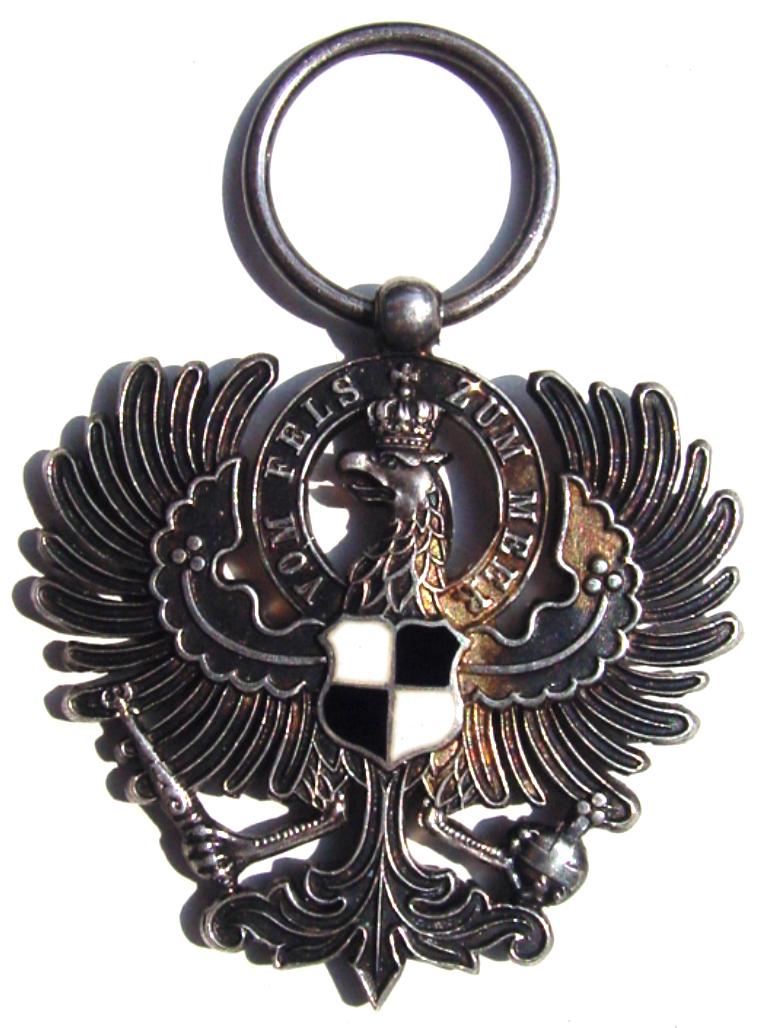
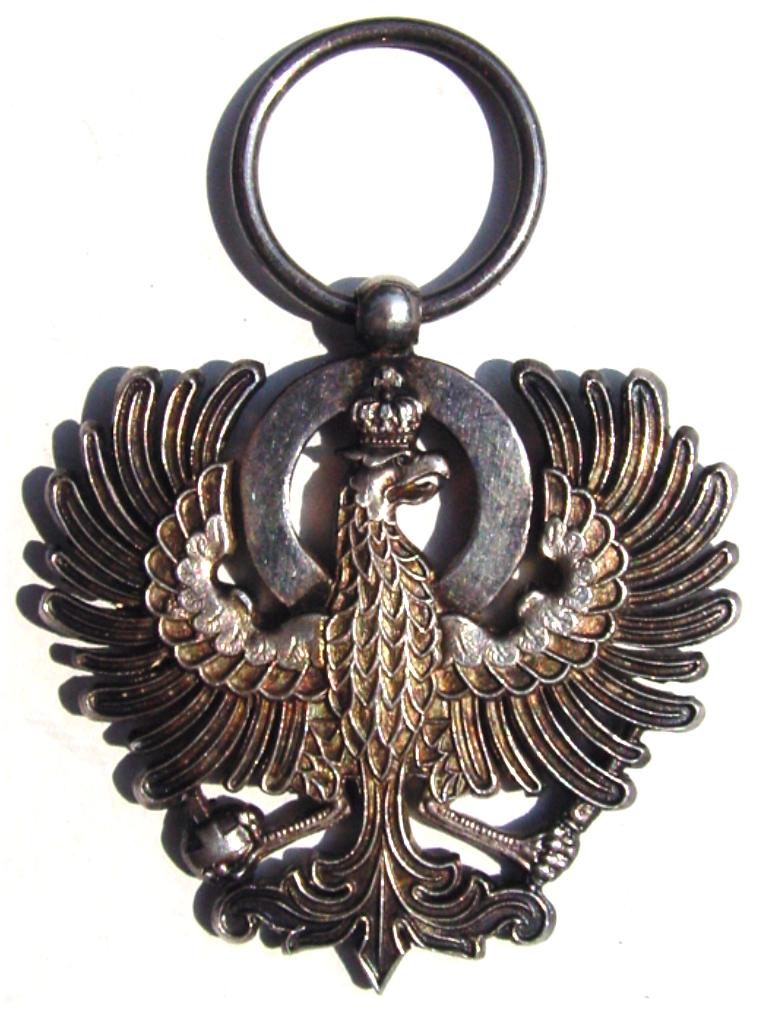
Besides the Eagle of the
Bearers (Adler der Inhaber), a plain silver eagle badge with enameled
Hohenzollern coat of arms, there are the Eagle
decorations for the Knights and Commanders.
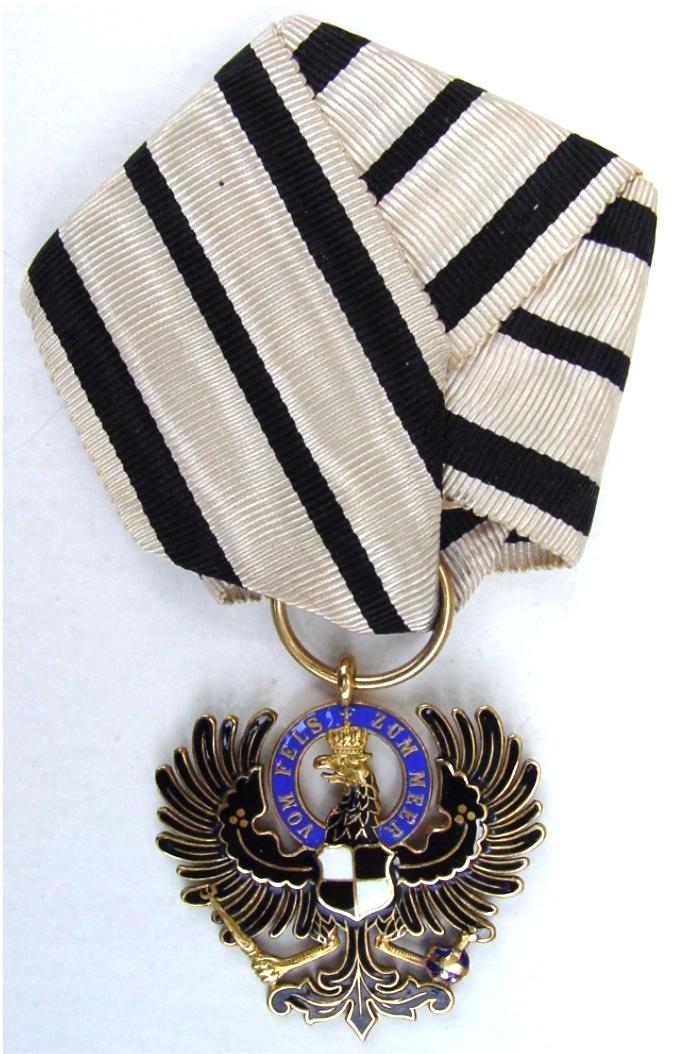
I like to take the
opportunity to write a few words about the Eagle of the
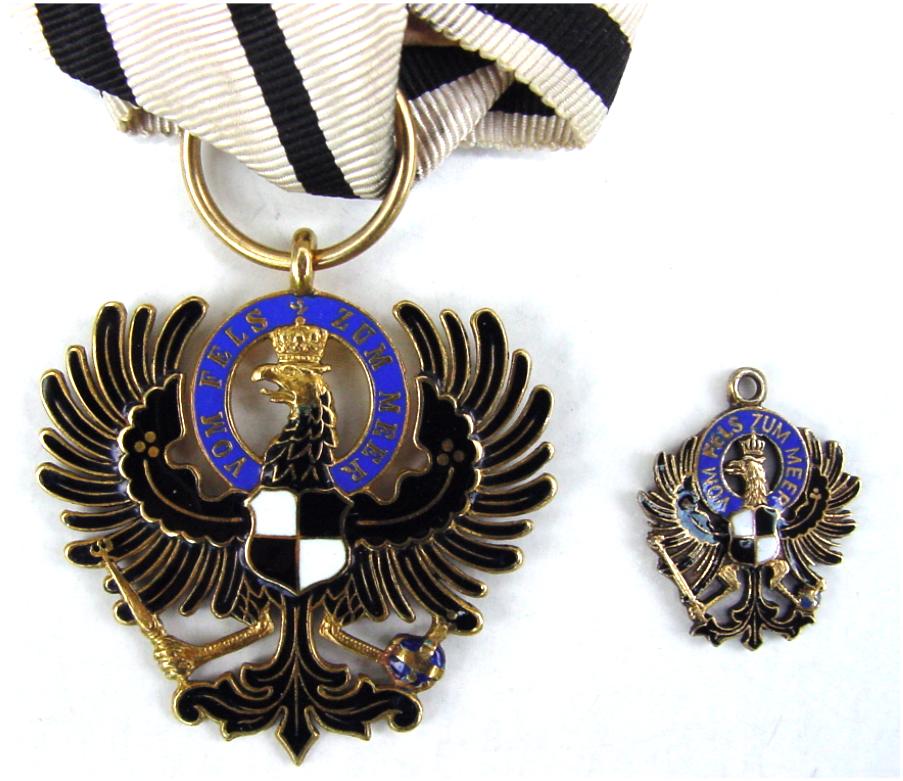
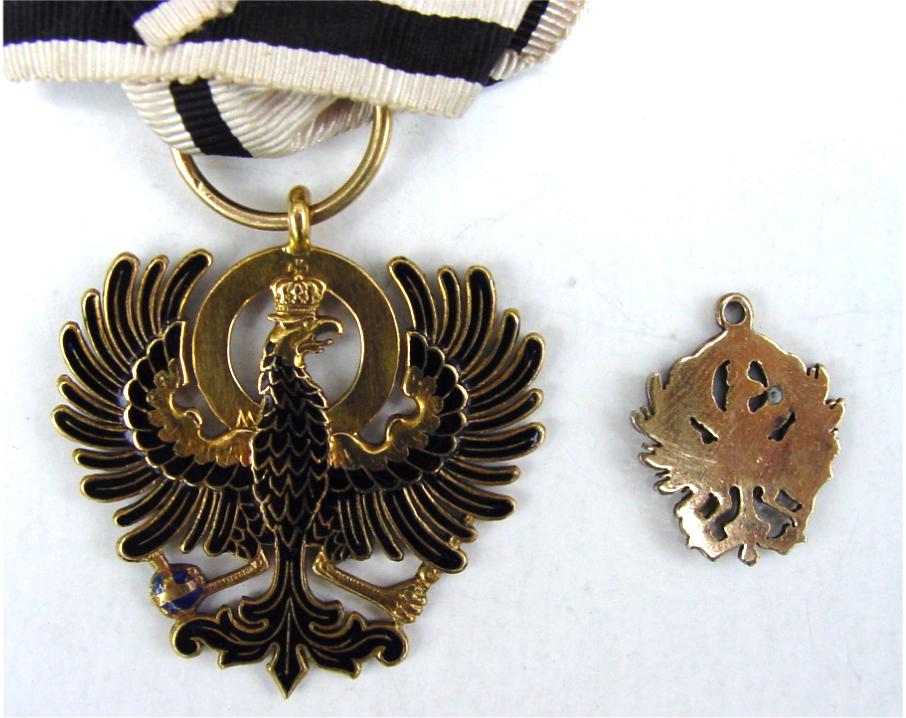
Knights, since I just bought one for my collection. I
actually bought the Eagle decoration together with a Red
Eagle Order 4th class last model including their
matching miniatures. All pieces came right out of
Germany from a widow named Mrs. Ziegler (maiden name:
Lauffer, born in 1904). The heirs unfortunately
weren't able to tell me anything about those decorations. We
can only speculate about the history of these pieces,
but do know that the Red Eagle Order was given for long
service as well as the Eagle of the Knight. In this case
maybe a teacher, maybe director of a school, was lucky
enough to be awarded the Red Eagle during his time in service,
and received the Eagle of the Knight decoration going into retirement, following the general practice.
The early Eagle badges
were made by Hossauer and crafted in an elaborate,
3-dimensional manner and are only enameled on the front. The Hossauer makers mark is easily to
be found on
the reverse of those decorations. Pieces made after the Hossauer period are
generally flat and enameled on both sides. Original
decorations made before 1916 are made form real gold and
crafted from two pieces, front and back, to create a
hollow construction. The resulting weight is
rather lightweight - normally between 7 and 9 grams. Those
badges show an incredible workmanship as shown on the
pictures here.
Only 485 pieces were
awarded between 1851 and 1918, equal to only 7 badges
per year. Since the recipients were mostly men belonging
to the
lower to mid income bracket the likelihood of acquiring a piece
for commemorative purposes for 81 Mark is doubtful. The
heirs were normally not able to afford a piece like
this either. Most eagles were therefor returned to the Prussian Orders Commission
as the law at the time demanded.
The eagle badges are
certainly a highlight of any Prussian collection and
extremely hard to find.
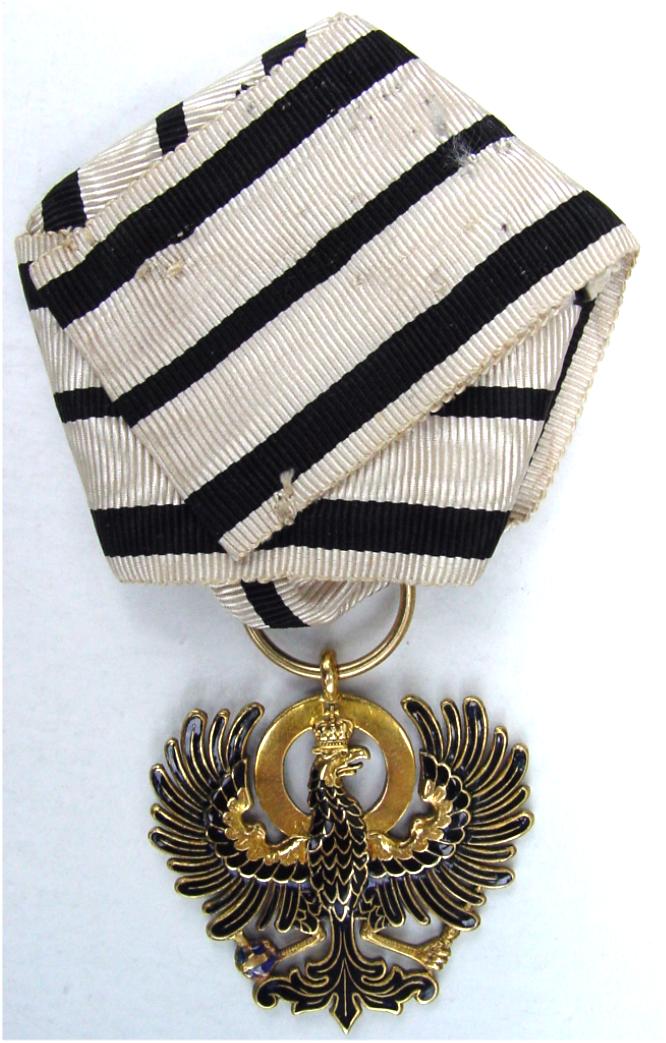
For
comparison a Eagle of the Bearers (Equivalent size to
the Eagle of the Knights):
© A. Schulze Ising, VI/02 |